Can You Swim with Turtles in Curaçao Without a Tour?
Where to find sea turtles in Curaçao, the best beaches for turtle spotting, guided vs independent options, and tips for a responsible encounter.
Yes, You Can, but Should You Go Alone?
You do not need a tour to swim with sea turtles on Curaçao. Green sea turtles feed in shallow water you can walk into from the beach: no boat, no reservation, no entrance fee. Few Caribbean islands make it this easy.
The real question is whether going alone is the better call. On your own you save money and set your own clock. With a guide you get gear that fits, someone watching you in the water, and transport if you have no car. This guide covers the spots and both approaches.
Playa Grandi (Playa Piskadó): The #1 Turtle Spot
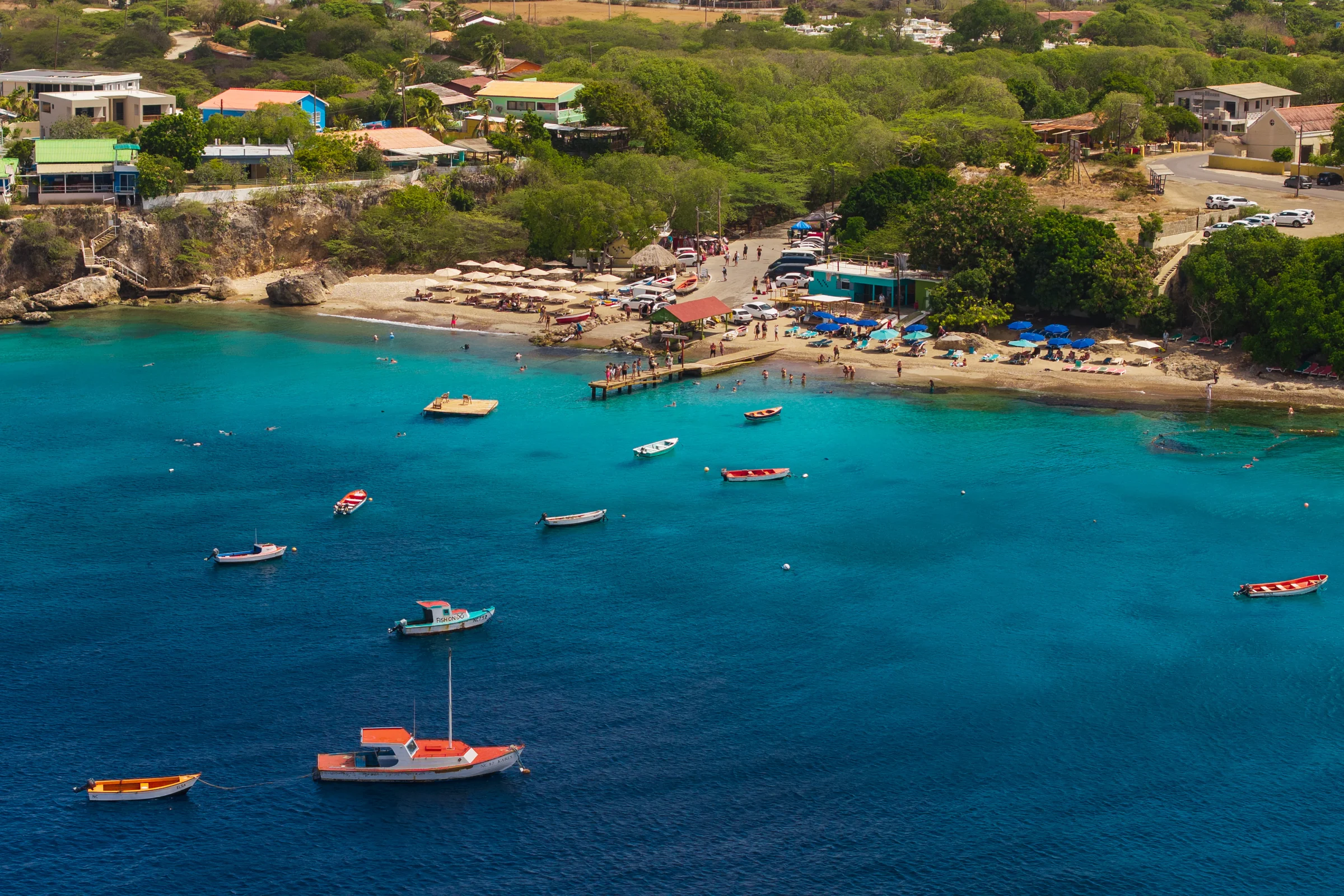
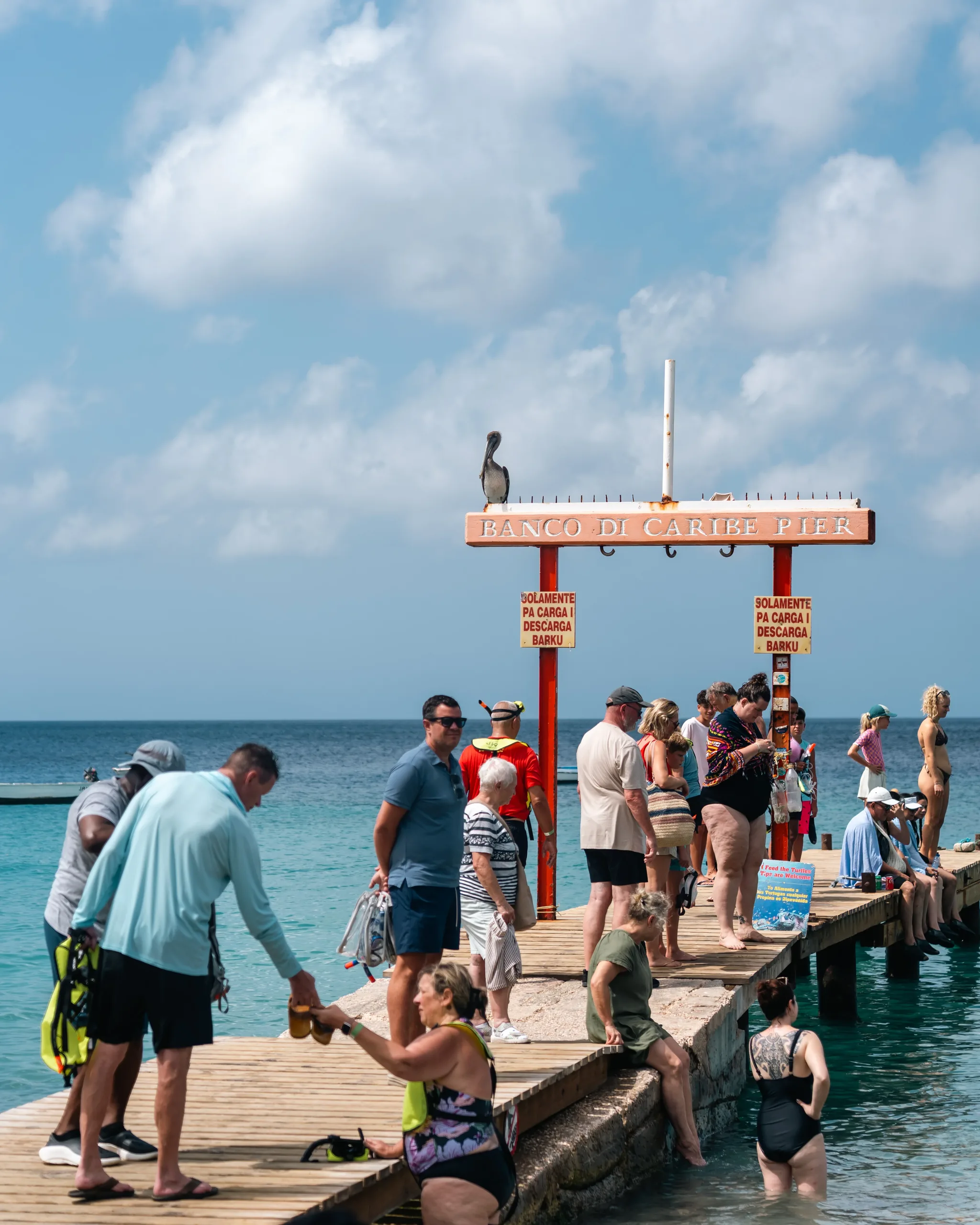
If you only visit one turtle spot, make it Playa Grandi (Playa Piskadó, "Fisherman's Beach" in Papiamentu), a working fishing cove in Westpunt, about 45 minutes from Willemstad. The beach itself is a narrow strip of coarse sand with a concrete pier and a handful of painted boats. Nobody comes for the sand.
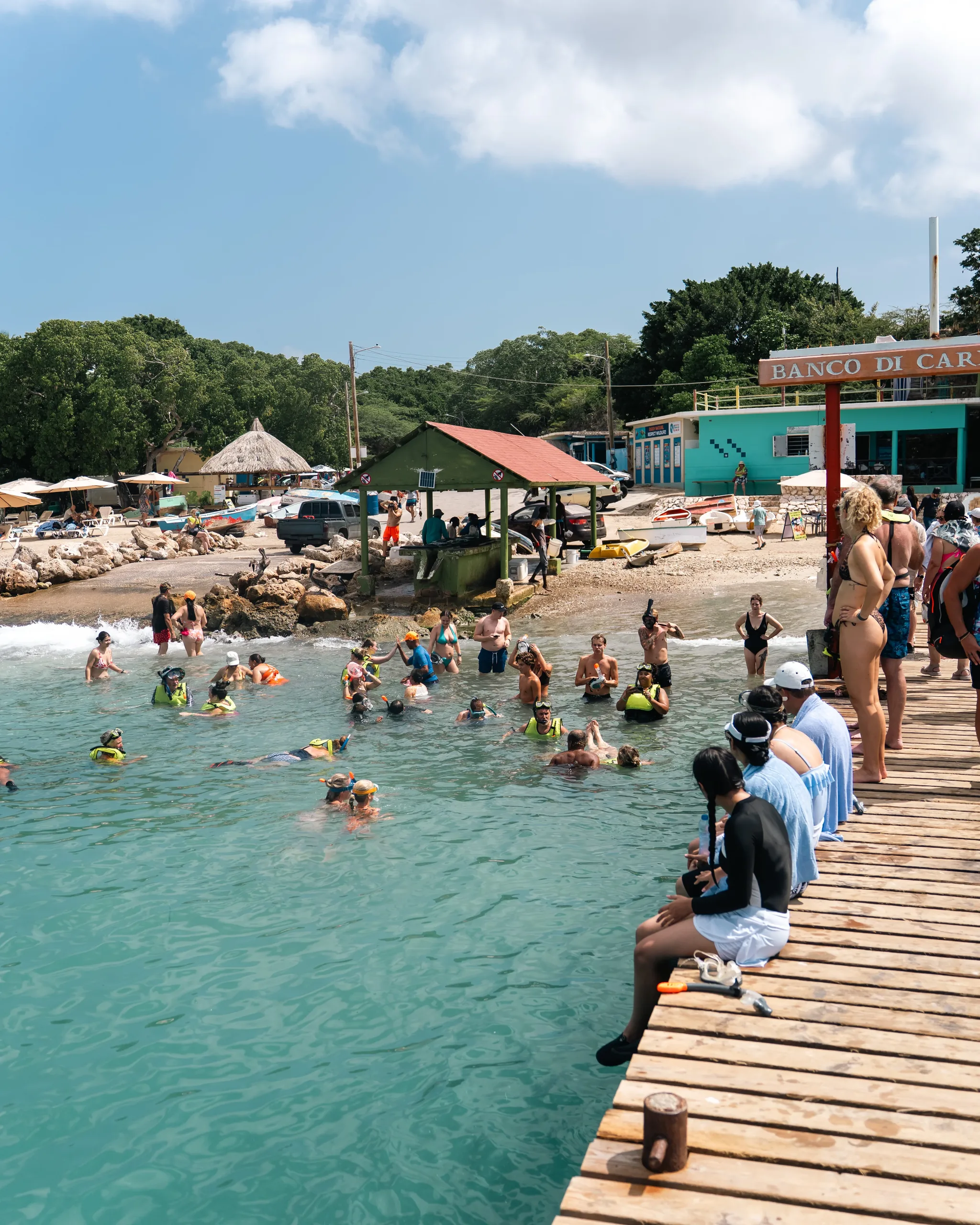
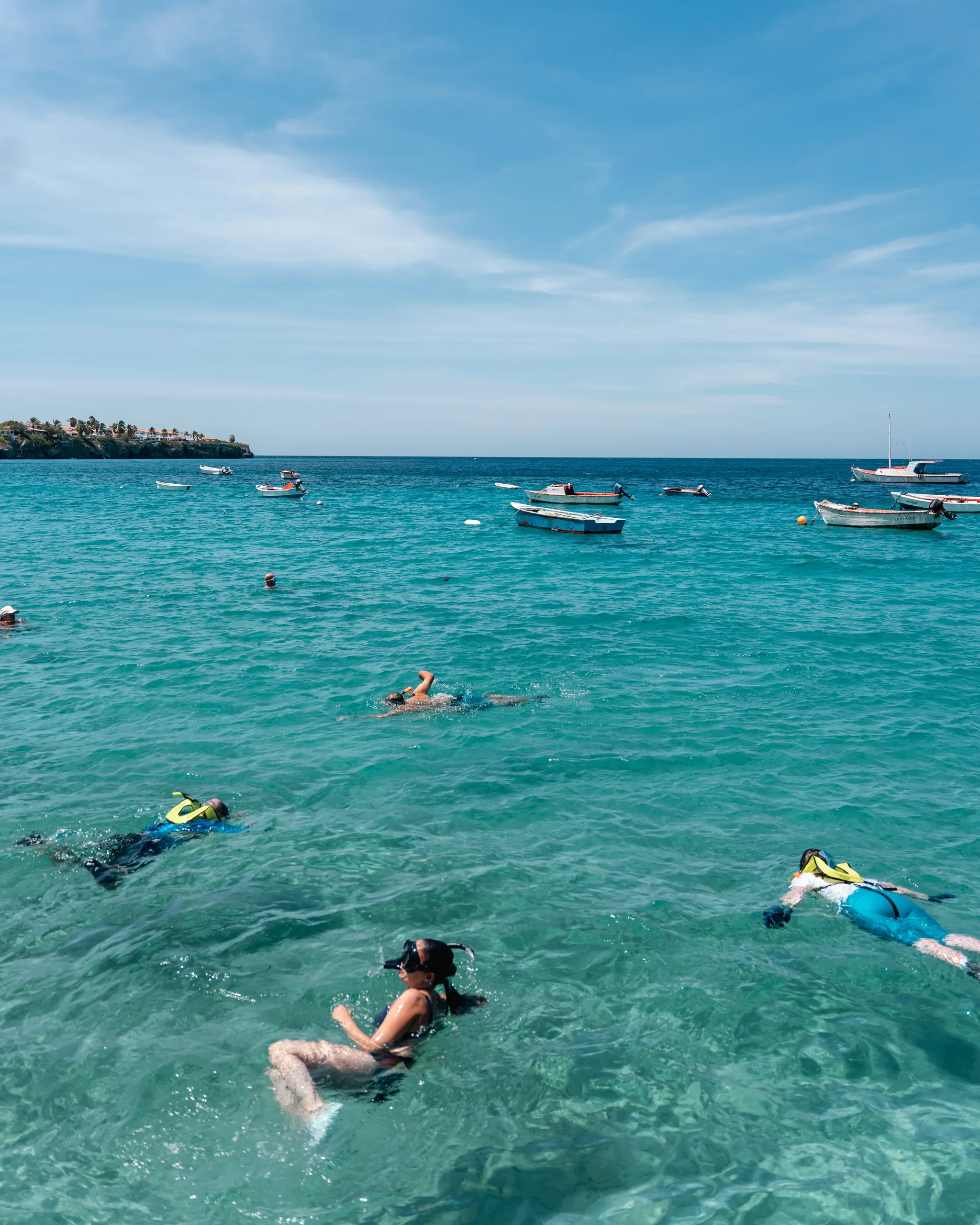
The fishermen clean their catch on the pier most mornings and toss the scraps into the shallows. The turtles learned the schedule. They gather around the pier in water shallow enough to stand in (waist to chest deep), sometimes a dozen at a time, close enough to watch from a few feet away. Some mornings you count fifteen. Others, two. They are wild animals feeding off a working pier, not an aquarium, and nobody can promise you a turtle, but in well over a hundred visits across all seasons, we have yet to come up completely empty here.
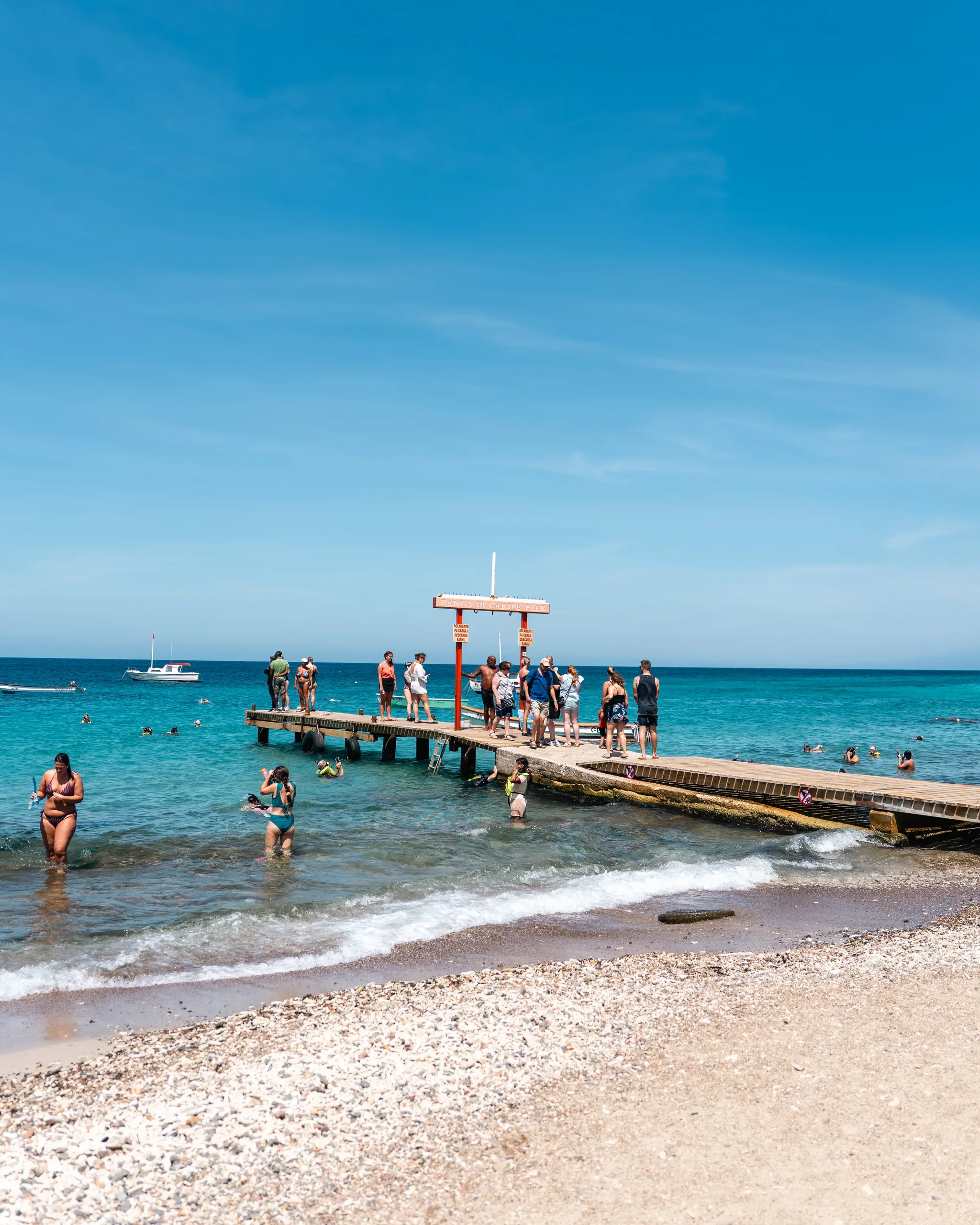
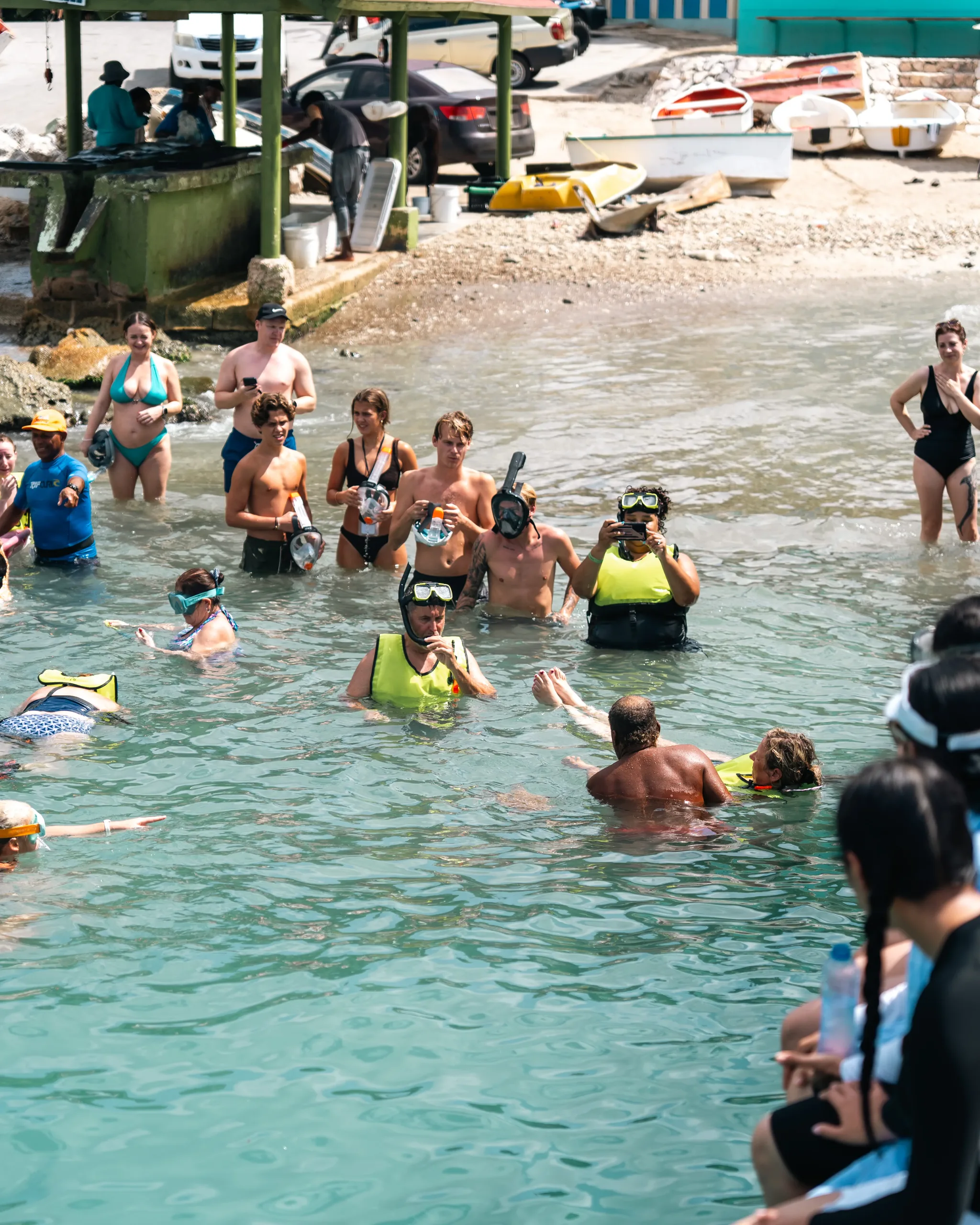
What to Know Before You Go
Go between 8:00 and 11:00 AM, while the fishermen are actually cleaning catch; by early afternoon the action fades. In the water by 8:30 is the sweet spot: fewer people, softer light for photos. Parking is roadside, entry is free, and facilities are close to zero: no restrooms, no lifeguard, no gear rental, sometimes a snack truck. Bring everything you need.
The entry is rocky with scattered coral rubble. Wear water shoes. Visibility is best in the morning, before wind and feet stir up the bottom.
Other Turtle Spots Around Curaçao
Grote Knip (Playa Kenepa Grandi)
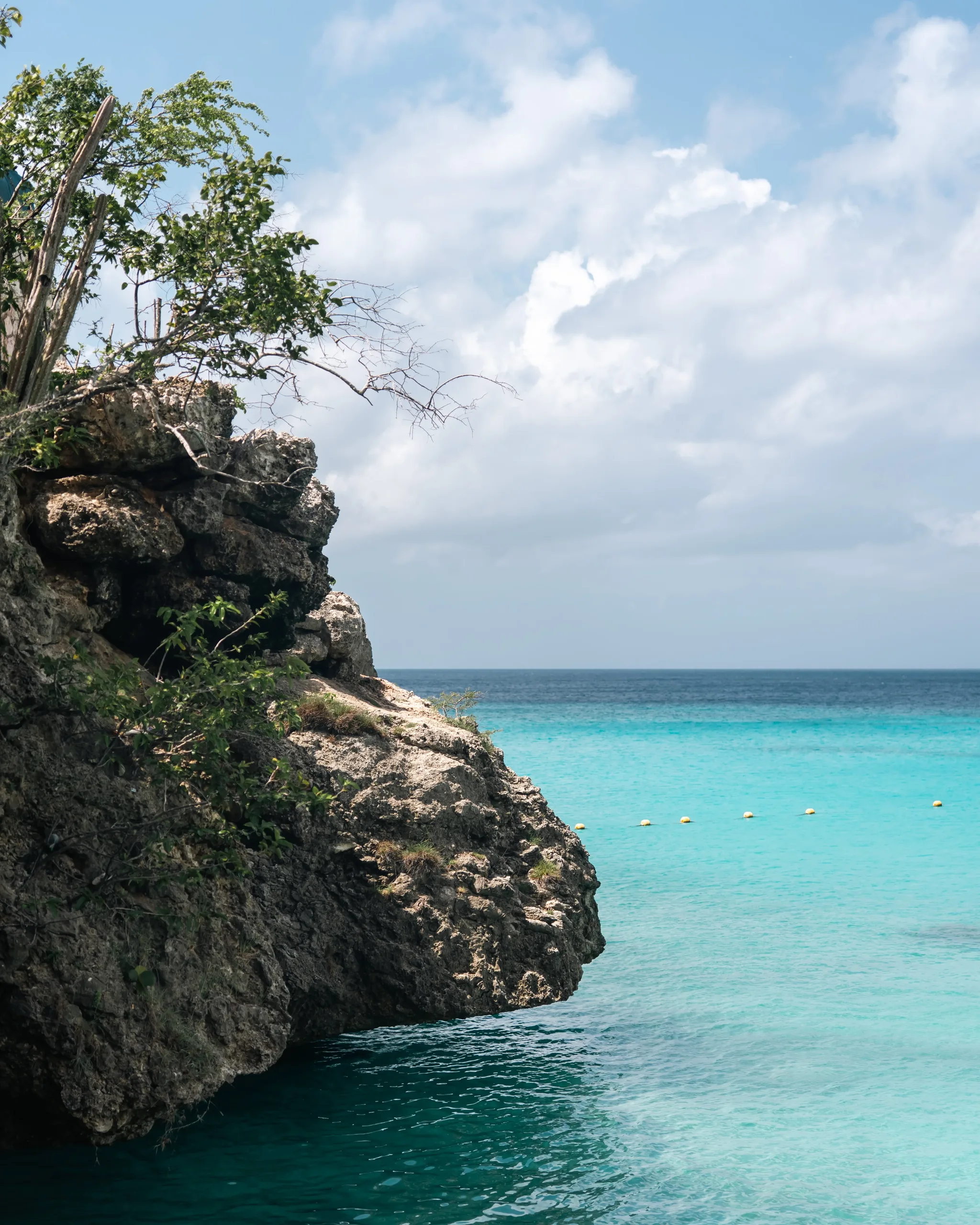
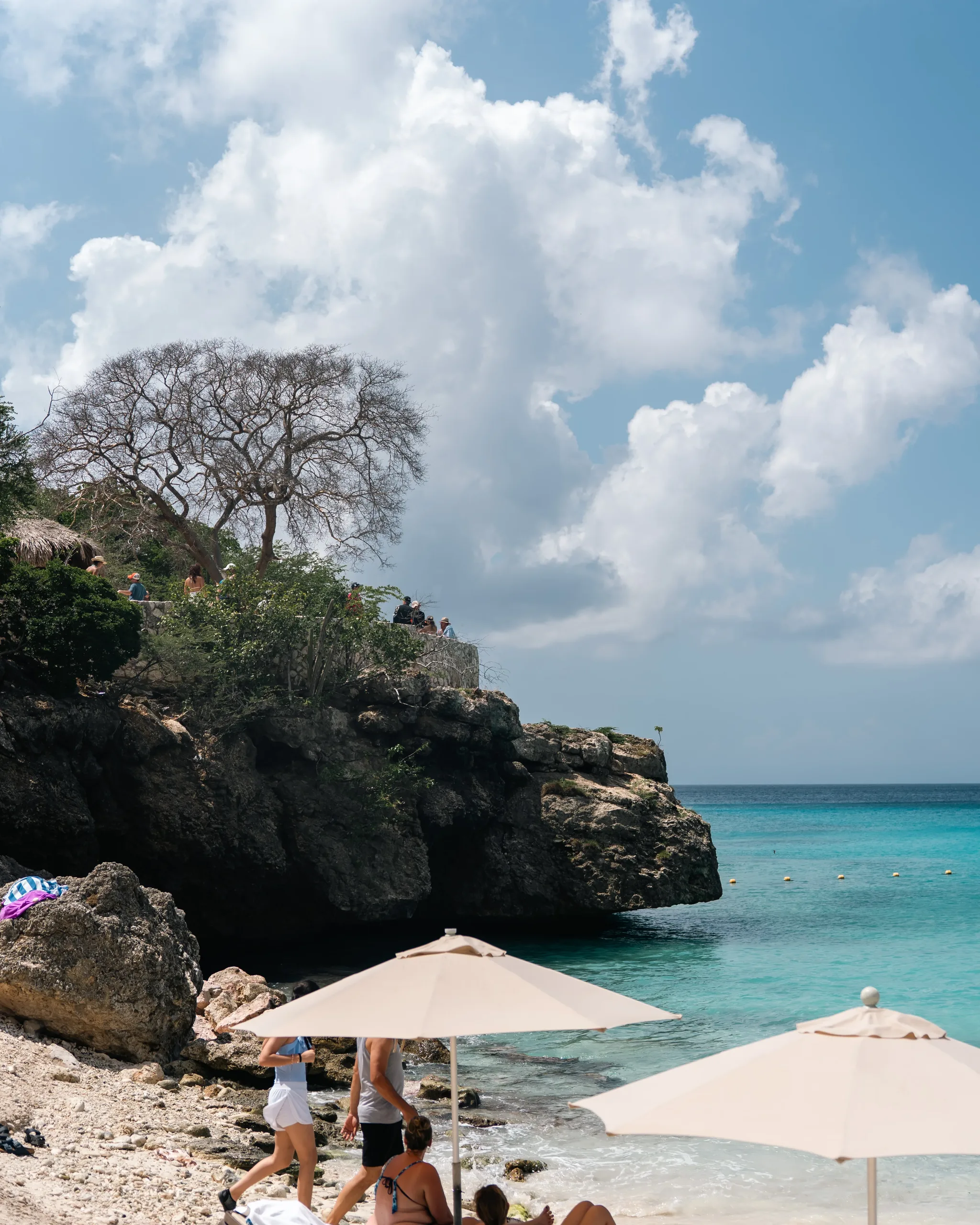
Grote Knip is the beach on the postcards (a wide white crescent under cliffs), and it doubles as a turtle spot. Green turtles graze the sea-grass beds along the right (north) side of the bay. Call it a 40-50% chance on any visit, so treat a sighting as a bonus, not the plan. Entry is free, there are restrooms and a small snack bar, and the snorkeling along the rocky edges is good with or without turtles.
Klein Knip (Playa Kenepa Chiki)
The smaller, quieter cove just north of Grote Knip. Turtles show up less often than at its big sibling, but the water clarity is often better because fewer swimmers churn it up. Small beach, fills fast; arrive early on weekends.
Playa Lagun
A narrow inlet between high cliff walls, so the water stays calm and sheltered. Turtles graze the sea grass on the sandy bottom, and the reef at the mouth of the inlet is dense. The beach is maybe 50 meters wide, and a small restaurant (Bahia de Lagun) sits right on the water. This is the turtle stop to pair with lunch.
Tugboat Beach (Caracas Bay)
The sunken tug sits upright in about 5 meters of water, covered in coral. Turtles pass through, but the odds are not worth a special trip. You come for the wreck and keep an eye out.
Klein Curaçao
The uninhabited island off the southeast coast holds a resident population of green turtles over its sea-grass beds. These are open-water encounters in 3-10 meters, and you need a boat trip to get there ($100-175 per person), a different day entirely from standing in the Piskadó shallows. Our Klein Curaçao vs Cas Abao guide covers the trip in full.
Going Solo vs. Guided Tour
The Independent Approach
Rent a car, drive to Playa Grandi, gear up, walk in. The turtles hold position within about 20 meters of the pier, in water shallow enough to stand in. You do not need anyone to find them for you.
Pros of going solo:
- Free beyond transport and gear
- Your schedule: stay five minutes or five hours, hit several beaches in one morning
- No group churning up the water around you
Cons of going solo:
- You need your own mask and snorkel. There is no rental shop at Playa Grandi
- No one watching you in the water if something goes wrong
- You need a rental car; taxis to the west coast get expensive
- No underwater photos unless you bring your own camera
The Guided Tour Approach
Dedicated turtle-snorkel tours run $50 to $90 per person for a half day and typically bundle hotel pickup, transport, gear, and an in-water guide, often with photos included.
Pros of a guided tour:
- Gear provided and fitted. A leaking mask ruins the whole morning
- Guides know where the turtles were this morning, not last month
- Safety support in the water, which matters for less confident swimmers
- No rental car needed, and many tours add a second reef stop
Cons of a guided tour:
- Cost adds up, especially for families
- Fixed schedule: you go when the tour goes
- Groups of 8-15 mean more bodies in the water
Best Time to See Turtles
Turtles are here year-round. The island sits outside the hurricane belt, the water holds 26-29°C (79-84°F) in every season, and there is no "turtle season" to plan around. Conditions still move your odds:
Time of day: The fishermen start cleaning catch around 7:30-8:00 AM, and the feeding window is when the turtles are most active. By noon it drops off. At the other beaches, morning also wins. Visibility is highest before wind and swimmers stir up sediment.
Day of the week: Weekdays beat weekends at Playa Grandi, simply because fewer people are in the water. Tuesday through Thursday mornings are the quiet slot.
Sea conditions: Calm days give the best visibility. After heavy rain, or in the windy stretch from December through March, turtles may feed deeper or further from shore.
Season: There is a slight uptick in the dry season (January through September), but it is marginal. Hawksbill nesting runs roughly May to November. That is a nighttime beach event (Shete Boka National Park hosts a monitoring program), not a snorkeling one. For in-water encounters, any month works.
What You Need to Bring
- Mask and snorkel: The one piece of gear that decides your morning. Test the seal: press it to your face and inhale through your nose; it should stick without the strap. A leaking mask means clearing water instead of watching turtles.
- Fins: Optional at Playa Grandi, where the turtles are close. Useful everywhere else. Short travel fins are fine.
- Reef-safe sunscreen: Oxybenzone and octinoxate damage coral and can harm the turtles themselves. Use zinc oxide or titanium dioxide, applied 30 minutes before you get in, or skip the debate and wear a rash guard.
- Waterproof camera or phone pouch: Shallow, clear, well-lit water makes this about the easiest underwater photography you will find. A $10-15 phone pouch covers casual shots; a GoPro does better.
- Water shoes: Essential for Playa Grandi's rocky entry, helpful at Lagun. The sandy beaches do not need them.
- Water: A liter per person minimum. The west coast has little shade and the sun dehydrates you faster than you expect.
- Towel and dry bag: Playa Grandi has zero secure storage. Your things sit on the rocks while you swim.
Responsible Wildlife Interaction
The turtles' tolerance of people is the only reason any of this works, and it is revocable. These are wild, endangered animals. The rules, some legal, all sensible:
- Keep 2 meters (6 feet): If a turtle swims toward you, hold still and let it pass. Do not swim after it.
- Never touch: Illegal under Curaçao law, and it transfers bacteria in both directions.
- Don't feed: The Piskadó turtles eat fish scraps from the pier's normal work. Bringing food of your own disrupts their diet.
- No flash photography: Flash disorients marine animals, and the natural light here is more than enough.
- Don't block their path: Turtles surface to breathe. Never put yourself between a turtle and the surface; if one is ascending, move aside.
- Take your turn: When the pier is busy, fifteen or twenty minutes in the water is plenty. Lingering an hour while others wait is poor form.
- Pack out everything: There are no bins, and a plastic bag in the water looks like a jellyfish to a turtle.
Tips for the Best Experience
The small things that make the biggest difference on turtle mornings:
- Be in the water by 8:30 AM: Fishermen active, soft light, no crowd. By 10:00 the tour buses and phone cameras arrive and the mood changes.
- Skip neon swimwear: It sounds odd, but muted colors (navy, dark green, black) disturb the turtles less than neon yellow or hot pink, and they will come closer.
- Float still: Motionless at the surface beats swimming after them, every time. Face down, breathe slowly through the snorkel, and let the turtles do the moving.
- Watch the fishermen's timing: Activity surges when a new catch gets cleaned. Hold position 5-10 meters from the cleaning spot, not directly under it, because that is where the guts land.
- Pair it with a real beach: Playa Grandi is not a lounging beach. After 30-60 minutes in the water, drive five minutes to Grote Knip or Playa Kalki for the rest of the day.
- Check your spare tire: The Westpunt road has stretches with no cell signal. Thirty seconds of checking before you leave.
So do you need a tour?
No. Not if you have a car, your own gear, and confidence in the water. Playa Grandi gives you close-range turtle encounters in standing-depth water for the cost of getting there, and going alone is cheaper and more flexible. Missing the car, the gear, or the confidence? That is what the tours are for: transport, fitted gear, someone in the water with you, and usually photos. Either way, go in the morning and keep your distance. And remember that nobody, guide or no guide, can promise a wild animal will show up.
Frequently asked questions
- Can you swim with turtles in Curaçao without a tour?
- Yes. Playa Piskadó (Playa Grandi) at Westpunt is a free public beach, and green sea turtles feed near the fishing dock most days. You need your own transport and snorkel gear, and mornings around the returning fishing boats give the best odds. A tour mainly buys the driving, the timing, and gear.
- Where is the best place to see sea turtles in Curaçao?
- Playa Piskadó at Westpunt is the most reliable spot, because fishermen clean their catch there and the turtles come in for the scraps. Grote Knip sees turtles over its sea-grass beds less often, and Klein Curaçao has excellent turtle odds but requires a full-day boat trip.
- Are turtle sightings guaranteed in Curaçao?
- No. These are wild animals, and no one can promise a wild animal will show up. Sightings at Playa Piskadó are the norm rather than the exception, especially in the morning window around the fishing boats, but treat any sighting as a bonus and plan a beach day you would enjoy either way.
- What are the rules for swimming with turtles in Curaçao?
- Keep at least two meters of distance (the turtles are protected by law), never touch, feed, chase, or block them, and float calmly instead of splashing toward them. If a turtle changes direction because of you, you are too close. Reef-safe sunscreen and fins kept well clear of the animals are part of the deal.
- When is the best time to see turtles in Curaçao?
- Year-round. The water holds 26 to 29°C in every season and there is no turtle season to plan around. Day to day, mornings are calmer and the fish-cleaning window at Playa Piskadó concentrates the action; wind and chop matter more than the calendar.