Where to See Flamingos in Curaçao: A Local's Guide
Where wild flamingos gather in Curaçao, from Jan Kok and Sint Willibrordus to Rif Sint Marie. Best times, responsible viewing tips, and photography advice.
Curaçao's Wild Flamingos
The flamingos in Curaçao are wild. Nobody feeds them, nobody pens them, and nobody can tell you which pan they will be standing in on Tuesday. They move between salinas (the island's old salt pans), following water levels and food, and on any given visit you might count fifty birds or none. This guide covers where they are seen most often, why, and how to raise your odds without spooking the flock.
Why Flamingos Choose Curaçao's Salt Pans
The salinas are a food supply, not scenery. Their shallow, salt-saturated water grows brine shrimp and small invertebrates in bulk, and the birds filter-feed on them all day. The pink is the diet: carotenoid pigments from the shrimp work into the feathers over time. Most of these pans were shaped for colonial-era salt production and are no longer harvested, which left the shrimp (and the birds that eat them) alone. An old industrial landscape turned into habitat by accident.
Jan Kok and Sint Willibrordus: The Classic Spot
Ask a local where to look and the answer is the salina at Jan Kok, next to the village of Sint Willibrordus on the southwest side. The pan sits below the whitewashed Sint Willibrordus church tower (that church-over-the-water combination is the postcard shot most people are chasing), and part of the surrounding wetland is set aside specifically to protect the birds. It is the most consistent viewing spot on the island: there is almost always some water and at least a few birds, even when the big flock is elsewhere.
Consistent is not guaranteed. Water levels shift with the rain, and the flamingos leave the moment another pan offers better feeding. Viewing is easy, though. Pull-offs and a viewpoint along the road let you watch the whole salina without leaving the car, which is exactly how to do it (more on that below).
Rif Sint Marie and the Wider Wetland
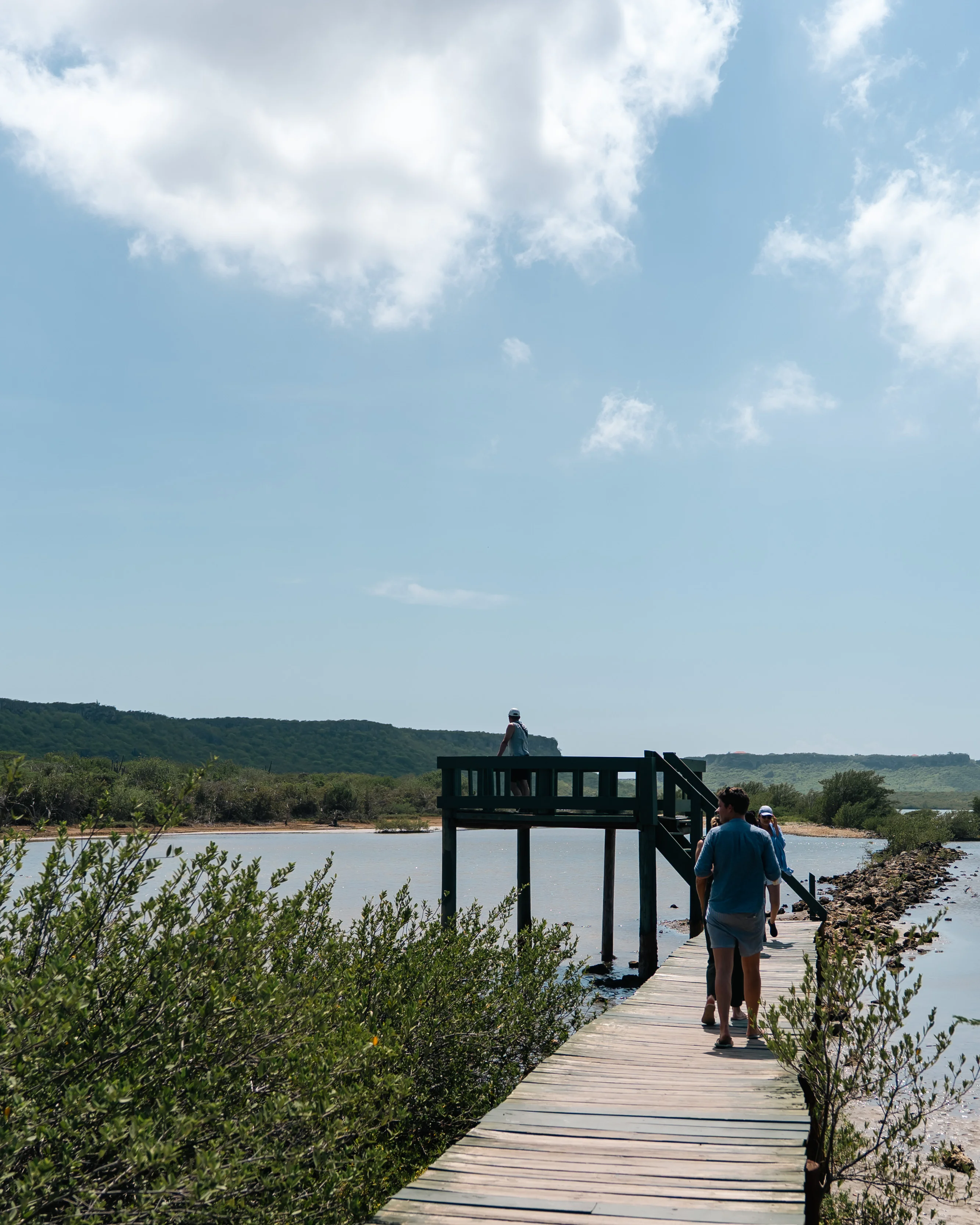
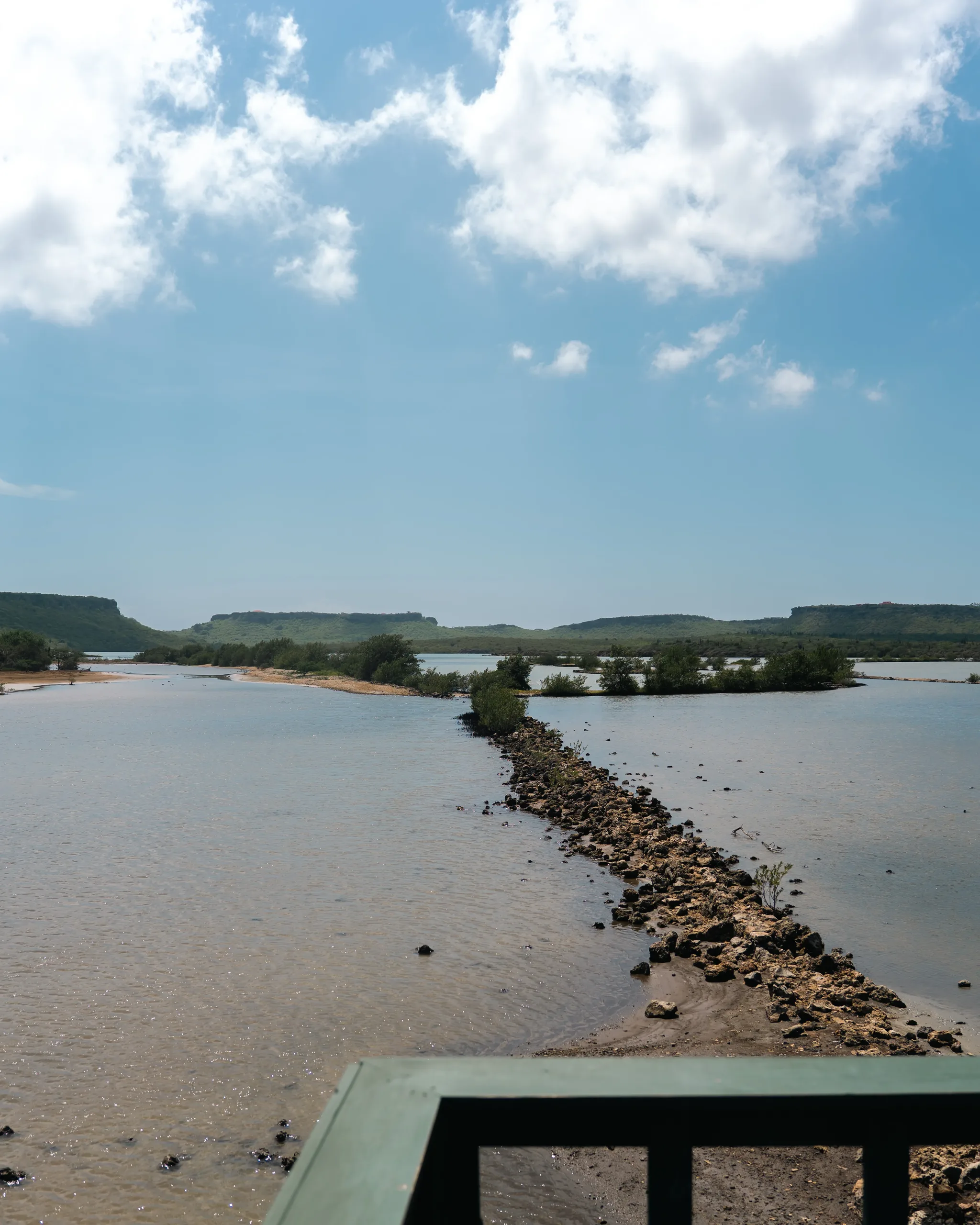
A few minutes from Jan Kok, the Rif Sint Marie salina belongs to the same wetland and is internationally recognized as a protected feeding ground for flamingos and other wading birds. You do not walk in (the marsh and mudflats are a reserve, closed to foot traffic), but it views well from the nearby roads with binoculars or a zoom lens. The birds shuttle between the two pans, so if Jan Kok looks quiet, drive over before you give up.
Other Salinas Worth a Look
Smaller salt pans and lagoons dot the quieter west and east ends of the island, and flamingos and other shorebirds turn up in them now and then. None are predictable: less water, smaller flocks. Plan around Jan Kok and Rif Sint Marie, and treat any other salina as a bonus you happened to drive past.
Best Time of Day
Early morning or late afternoon. The birds feed more in the cool hours, the light is low and soft instead of the flat glare of midday, and there are fewer cars stopped on the shoulder. If you can only pick one window, take the hour or two after sunrise or before sunset.
How to Watch Responsibly
Flamingos are skittish. A settled flock can lift off in seconds if someone walks toward the water, and once spooked they often stay gone for the rest of the day. The rules below are not etiquette for its own sake: following them is what gets you the longer, better look.
- Stay in or near your car. That is what the roadside viewpoints at Jan Kok are for. A parked car reads as background to the birds; a person walking toward the water does not.
- Keep your distance. Never walk out onto the salt flat. A closer look comes from binoculars or a longer lens, not from closing the gap on foot.
- No drones near the flamingos. A drone overhead reads as a predator and can scatter the whole flock in one pass. Fly it somewhere else on the island.
- Keep it quiet. Slammed doors, loud voices, and fast movement all raise the odds of a spooked flock. Move slowly and let the birds set the pace.
- Never chase for a photo. A mid-flight shot you caused by walking in cost the bird energy it needs, and it ends the sighting for everyone else at the viewpoint.
Photography Tips
The single best upgrade is a zoom lens, not proximity. A 200mm-plus lens, or a phone with real optical zoom, fills the frame from a distance the birds tolerate, which in practice is also what gets you a calm shot instead of a blur of scattering wings. Keep the sun behind or beside you; one more reason morning and late afternoon work. Rest the camera on the car window frame and wait. Flamingos stand still for long stretches, so a few quiet minutes usually beat a rushed burst.
Flamingos as Part of a Bigger Day
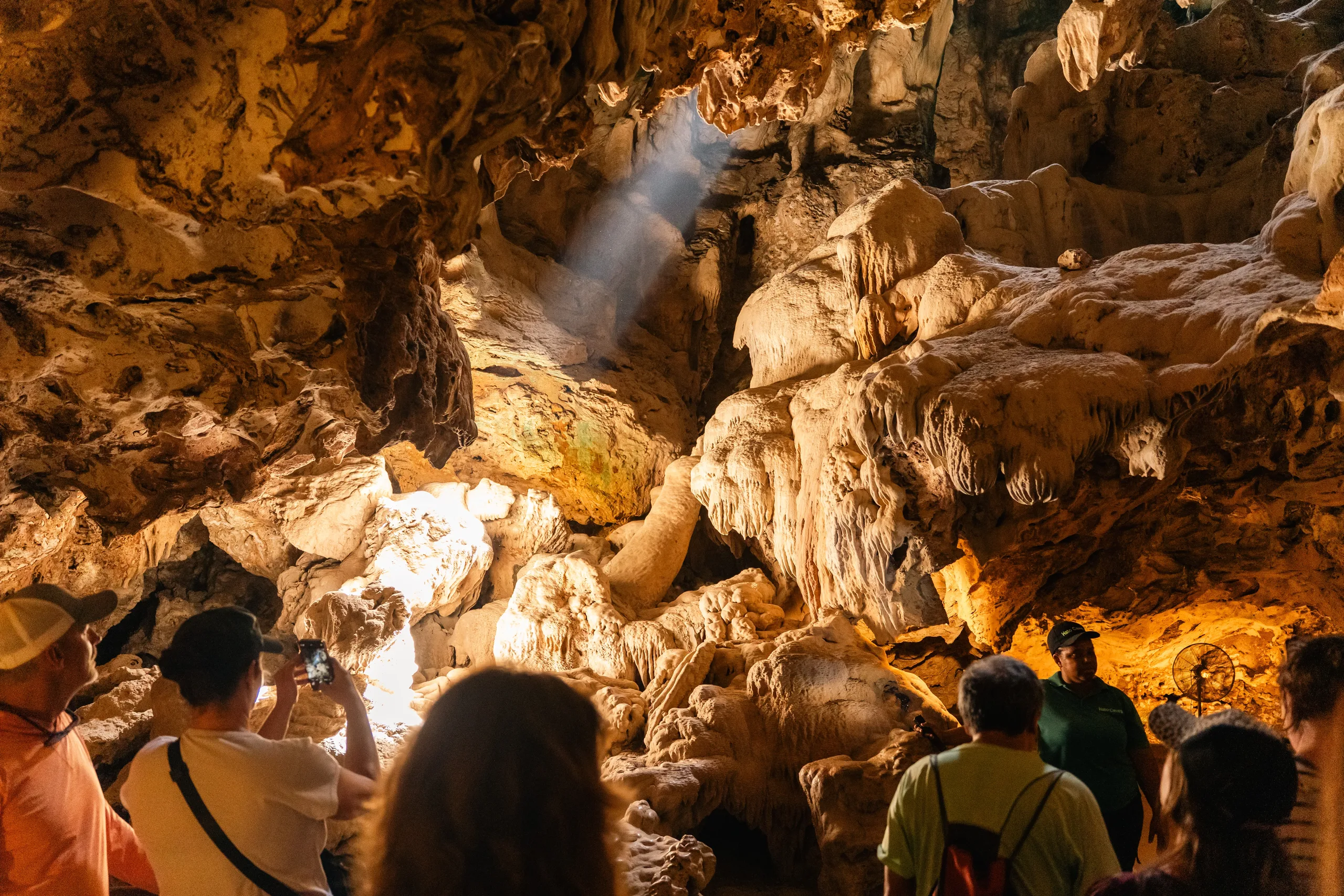
Since no sighting is guaranteed, the sensible move is to make the salinas one stop in a bigger day instead of a dedicated errand. Our Half-Day Hato Caves tour passes the flats on the way, and the Green Escape full-day tour builds in time at the salt flats between the island's other nature stops. A driver who was there last week also knows which pan is holding water and birds; that changes faster than any website keeps up with.
If the flamingos are one stop on a longer trip, our things to do in Curaçao guide rounds up the rest of the island, and the Christoffel National Park guide covers the other big wildlife destination: home of the Curaçao white-tailed deer and some of the island's best hiking. Wherever you look, treat a sighting as a bonus, not a promise.
Frequently asked questions
- Where can you see flamingos in Curaçao?
- The classic spot is the salina near Jan Kok and the village of Sint Willibrordus on the southwest side of the island, viewable from roadside pull-offs. Nearby Rif Sint Marie is part of the same protected wetland and is a strong backup when Jan Kok is quiet. Smaller salinas elsewhere on the island occasionally have flamingos too, but sightings there are less predictable.
- Is it guaranteed you'll see flamingos in Curaçao?
- No. Flamingos are wild birds that move between salinas depending on water levels and food supply, so no location can promise a sighting. Jan Kok and Sint Willibrordus offer your best chance since there is almost always some water and some birds present, but flock size varies from day to day.
- What is the best time of day to see flamingos in Curaçao?
- Early morning and late afternoon are best. The birds tend to be actively feeding during these windows, the light is softer for photos, and there is usually less roadside traffic disturbing the area than at midday.
- Can you get close to the flamingos in Curaçao?
- You should not try to. Flamingos spook easily and often will not return the same day if approached too closely. Stay in or near your car, keep a respectful distance, avoid loud noise, and never fly a drone near the flock. Use a zoom lens or binoculars instead of walking toward the birds.
- Why do flamingos gather at Curaçao's salt pans?
- The salinas are shallow, salt-saturated pools that support brine shrimp and small invertebrates, which make up the bulk of a flamingo's diet. The carotenoid pigments in that diet are also what give the birds their pink color over time.
- Do Curaçao tours include a flamingo stop?
- Some do. Our Half-Day Hato Caves tour and our Green Escape full-day tour both route past the salt flats as part of a wider day, so you get a chance at a sighting without needing to plan a dedicated trip around it.